
Can chronic yawning be related to a breathing pattern disorder?
- 28 March 2026
YES, chronic yawning can be related to a breathing pattern disorder.
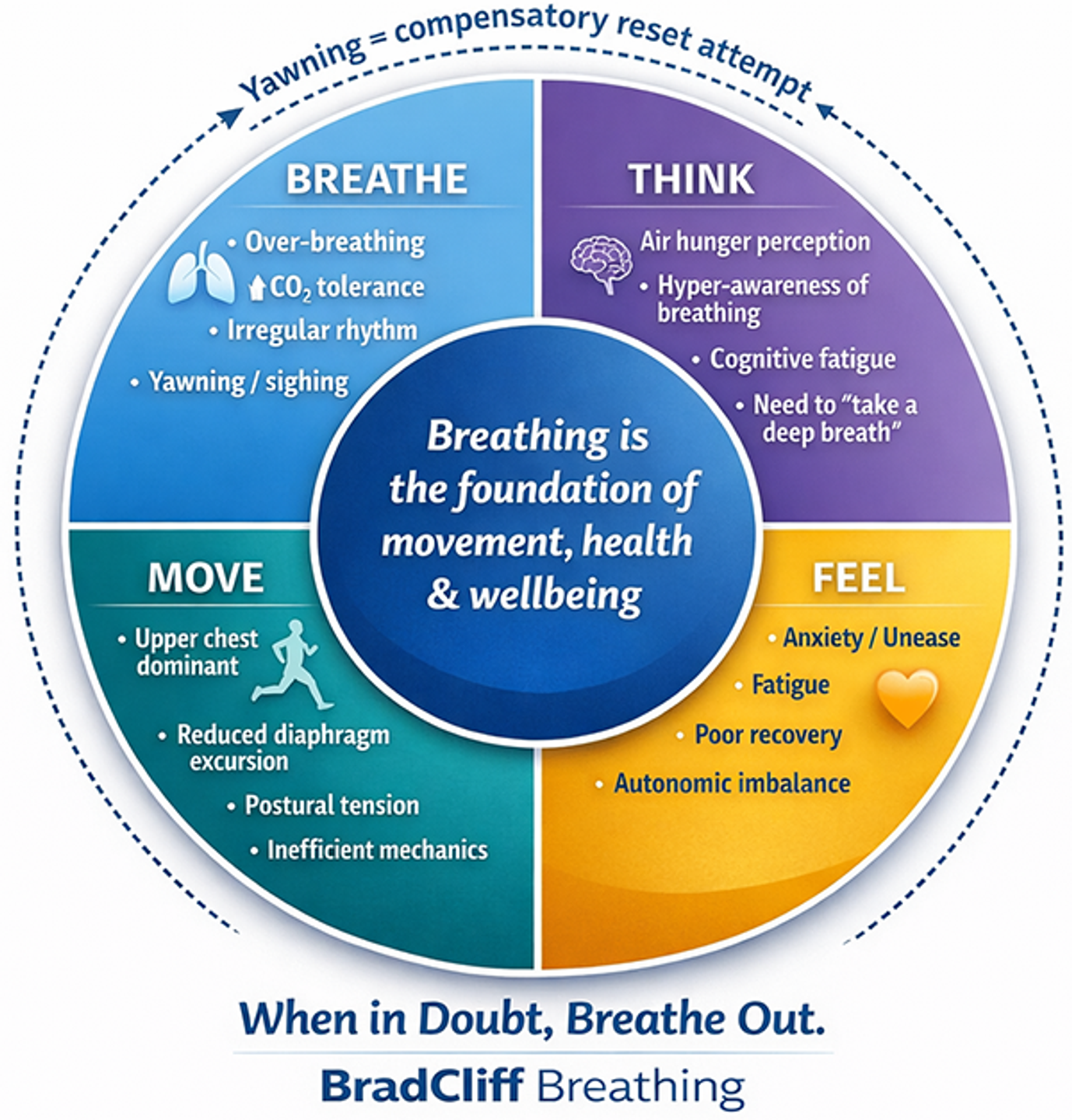
 1. Dysregulated CO₂ (not lack of oxygen)
- Most people think yawning = low oxygen
- But in BPD (especially over-breathing), it’s more about low CO₂
- Chronic over-breathing → ↓ CO₂ → brainstem drive becomes unstable
- Yawning acts like a reset breath to rebalance gases temporarily
This fits strongly with hyperventilation-type patterns.
2. “Air hunger” + unsatisfying breaths
- Patients often report:
- “I can’t get a satisfying breath”
- “I need to yawn to feel full”
- Yawning becomes a compensatory deep breath attempt
Classic in: - Thoracic dominant breathing
- Apical breathing
- Poor diaphragm excursion
3. Autonomic + cortical involvement
- Yawning is linked to:
- limbic system
- brainstem respiratory centres
- In BPD, there’s often:
- ↑ sympathetic tone
- ↑ cortical override of breathing
Neuro-respiratory dysregulation, not just mechanics.
4. Fatigue & cognitive load
- BPD → inefficient ventilation → perceived fatigue
- Yawning may also reflect:
- mental fatigue
- autonomic imbalance
Clinically, when it matters
Chronic yawning becomes meaningful when you see it alongside other BPD signs:
- Mouth breathing
- Upper chest dominant pattern
- Frequent sighing
- Breath-holding or irregular rhythm
- High Nijmegen Questionnaire score
- Symptoms: anxiety, dizziness, fatigue, poor sleep
Important: It is not always linked to a BPD.
Yawning can also be linked to:
- Fatigue / Sleep debt: OSA, Bruxism
- Medications
- Neurological conditions (rare but important)
Reference: Meira e Cruz, M. (2026). Yawning as a clinical clue? Revisiting COMISA phenotypes in sleep-disordered breathing. Dental and Medical Problems. doi:10.17219/dmp/209575
Yawning is often a compensatory behaviour reflecting an unstable breathing system, not a primary problem itself.